
Leylandii and Conifer Removal in Worthing
Reducing or removing overgrown leylandii and conifer screens in coastal gardens from Shoreham-by-Sea to Littlehampton, with stumps ground out and the site left clear.
Get a Free Quote
No obligation. We reply the same working day.
Leylandii Removal in Worthing, From Seafront Gardens to the Downs
Worthing Tree Surgeons arranges leylandii & conifer removal across Worthing and the coast from Shoreham to Littlehampton, carried out by NPTC-qualified, fully insured tree surgery teams.
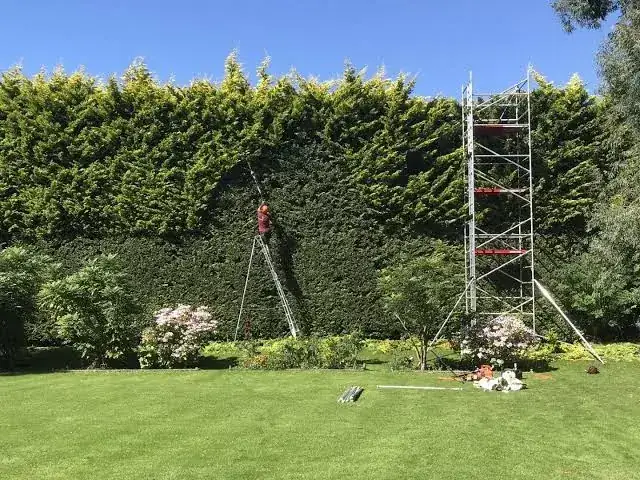
Along this stretch of coast, plenty of leylandii and other conifers were planted as a quick screen against the wind off the sea. Years later, many of those screens in Goring-by-Sea, Lancing, Ferring and Rustington are far taller and wider than anyone planned, blocking light and too tall to cut safely from a ladder.
Our team reduces conifer screens that can still be saved and removes the ones that cannot, dismantling in sections, chipping the brash and grinding the stumps so the ground is ready for what comes next. See stump grinding and tree removal.
Reduce or Remove? The Brown-Wood Problem
The RHS recommends trimming leylandii between April and the end of August, up to three times a season. The catch is that new growth will not appear from bare wood: cut into the old, leafless growth inside the hedge and it stays brown. A healthy hedge can usually lose up to a third of its height, ideally in early April, and taking off more can leave a bare, flat top or kill older or weaker plants. If your conifers need to come down by half or more, or the sides are already brown, a reduction will rarely give a result you are happy with. We will tell you honestly which side of that line yours sits on. See hedge trimming.
Does a Tall Conifer Wall Actually Shelter a Coastal Garden?
Not as well as people expect. The RHS advises that a windbreak works best when it is semi-permeable, filtering around 50 to 60 percent of the wind. Solid barriers create damaging eddies on each side, and a dense line of evergreens can behave in the same way. If you remove a screen you do not have to give up on shelter: the RHS lists hedging shrubs suited to exposed, salt-laden spots, including Elaeagnus x ebbingei, Euonymus japonicus, Olearia x haastii and sea buckthorn, and griselinia, escallonia and pittosporum where there is a little protection.
You do not need a felling licence to remove trees in a private garden, but you may still need council approval if the trees are protected. Adur & Worthing Councils publish a Tree Preservation Order register and online TPO maps for Worthing, Goring-by-Sea, Durrington, West Tarring, Broadwater, Findon Valley, High Salvington, Sompting, Lancing and Shoreham-by-Sea. Arun District Council shows TPOs and conservation areas on its interactive map for Ferring, East Preston, Rustington, Angmering and Littlehampton. In Findon village the South Downs National Park Authority is the planning authority. West Tarring and East Preston's old village centre are conservation areas, where you normally have to give six weeks' notice before cutting down or pruning a tree, unless the trunk is 75mm or less across at 1.5m. We check all of this before work is booked. See protected trees.
When It's Your Neighbour's Leylandii
Government guidance says a council can consider a complaint about a line of two or more mostly evergreen or semi-evergreen trees or shrubs, over 2 metres tall, that acts as a barrier to light or access. You must try to settle it with your neighbour first, and Adur & Worthing Councils point people to the West Sussex Mediation Service. The council cannot order a hedge removed, cut below 2 metres or cut in a way that kills it, and root problems are not covered. Adur & Worthing Councils list a fee of £300 (and say it cannot be repaid) and Arun District Council lists £450, both as listed in November 2026, so check the current figure.
Timing Around Nesting Birds
The RSPB says March to September is the main nesting season, and the Wildlife and Countryside Act 1981 protects a wild bird's nest while it is in use or being built. Removals are often easiest in autumn and winter. Whenever the work happens, we check for active nests first and hold off if we find one. For conifers brought down in a gale, see emergency tree work.
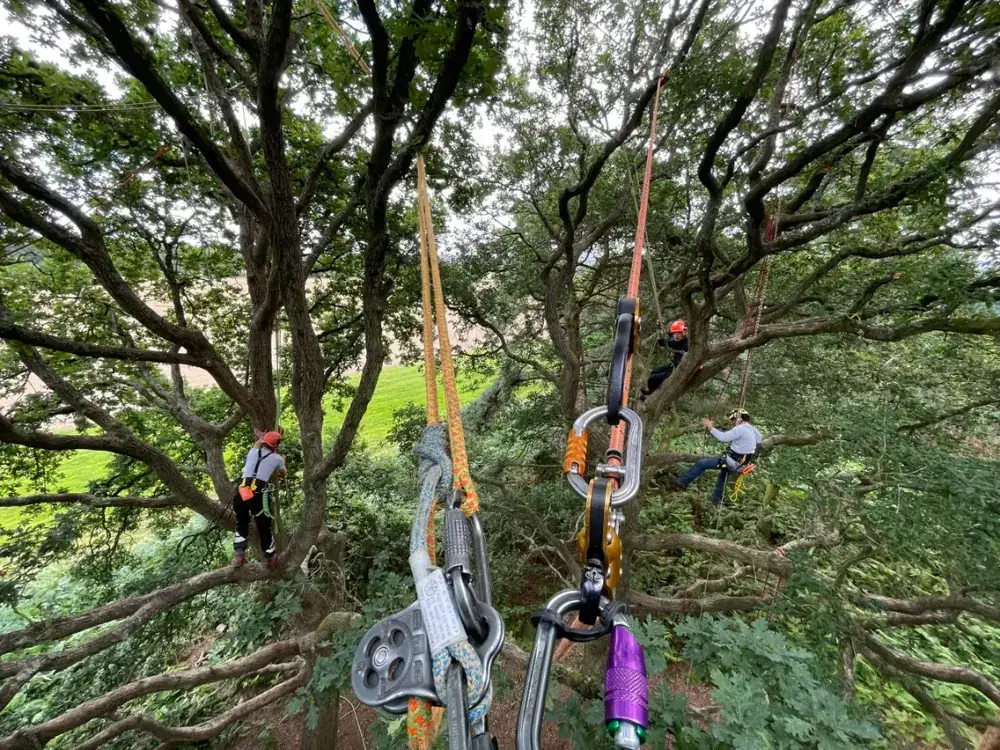
Our Leylandii and Conifer Work Includes
- Reductions
Height and side reductions on screens that can still be saved.
- Full removal
Leylandii, cypress and other conifer hedges, dismantled in sections where space is tight.
- Single large conifers
Taken down close to houses, sheds and boundaries.
- Stump grinding
So the line can be replanted or turfed.
- Clearance
All brash chipped and removed, with logs left on request.
- Checks first
TPOs, conservation areas and nesting birds checked before work starts.
Leylandii & Conifer Removal: Common Questions
Can you cut my leylandii right down to a lower height?
Sometimes, but leylandii do not grow back from bare brown wood. The RHS suggests taking off no more than about a third of the height at a time. If the hedge needs to come down much further than that, removing it and replanting usually gives a better result.
Do I need permission to remove leylandii in Worthing?
Not usually for trees in a private garden, and no felling licence is needed. If the trees have a Tree Preservation Order or stand in a conservation area, such as West Tarring, you will need to tell or apply to the council first. In Findon village, that is the South Downs National Park Authority. We check before we start.
My neighbour's leylandii blocks our light. Can the council make them remove it?
No. Under the high hedges law the council can require the hedge to be reduced, but not removed or cut below 2 metres. You must try to resolve things with your neighbour first, and there is a council fee to complain.
Can you grind the stumps out after removal?
Yes. We can grind conifer stumps on the same visit so the ground is ready for new hedging, turf or a fence.
Leylandii & Conifer Removal Across the Area
Our teams carry out leylandii & conifer removal in Worthing and these nearby towns.
Related Services
Tree Removal
Safe felling and sectional dismantling of dangerous, diseased or unwanted trees, with the site left clear.
Crown Reduction
Shorten and reshape a tree that has outgrown its space while keeping its natural shape and health.
Crown Thinning
Selectively remove branches to let light and wind through the canopy without changing the tree's size.
Crown Lifting
Remove lower branches to raise the canopy and clear paths, roads, windows and driveways.

Get a Free, No-Obligation Quote Today
Fill in the form and a qualified tree surgeon will come back to you the same working day. Prefer to talk? Give us a call.
Request Your Quote
No obligation. We reply the same working day.